


I hear from a lot of parents of autistic children — usually adolescents in my case, but sometimes younger. Often this is in the form of parents whose child just got an autism diagnosis and they are wondering about themselves. In Leading with Autism, I’ll have a lot of tips for us late-diagnosed folks that I hope will be helpful. But when people start asking me about their children and how to navigate the school system and other challenges in today’s world, I don’t have a lot of knowledge or personal experience to help. That’s why I was really glad to meet Emily W. King, Ph.D. and hear about her new book The Neurodivergent Learner.
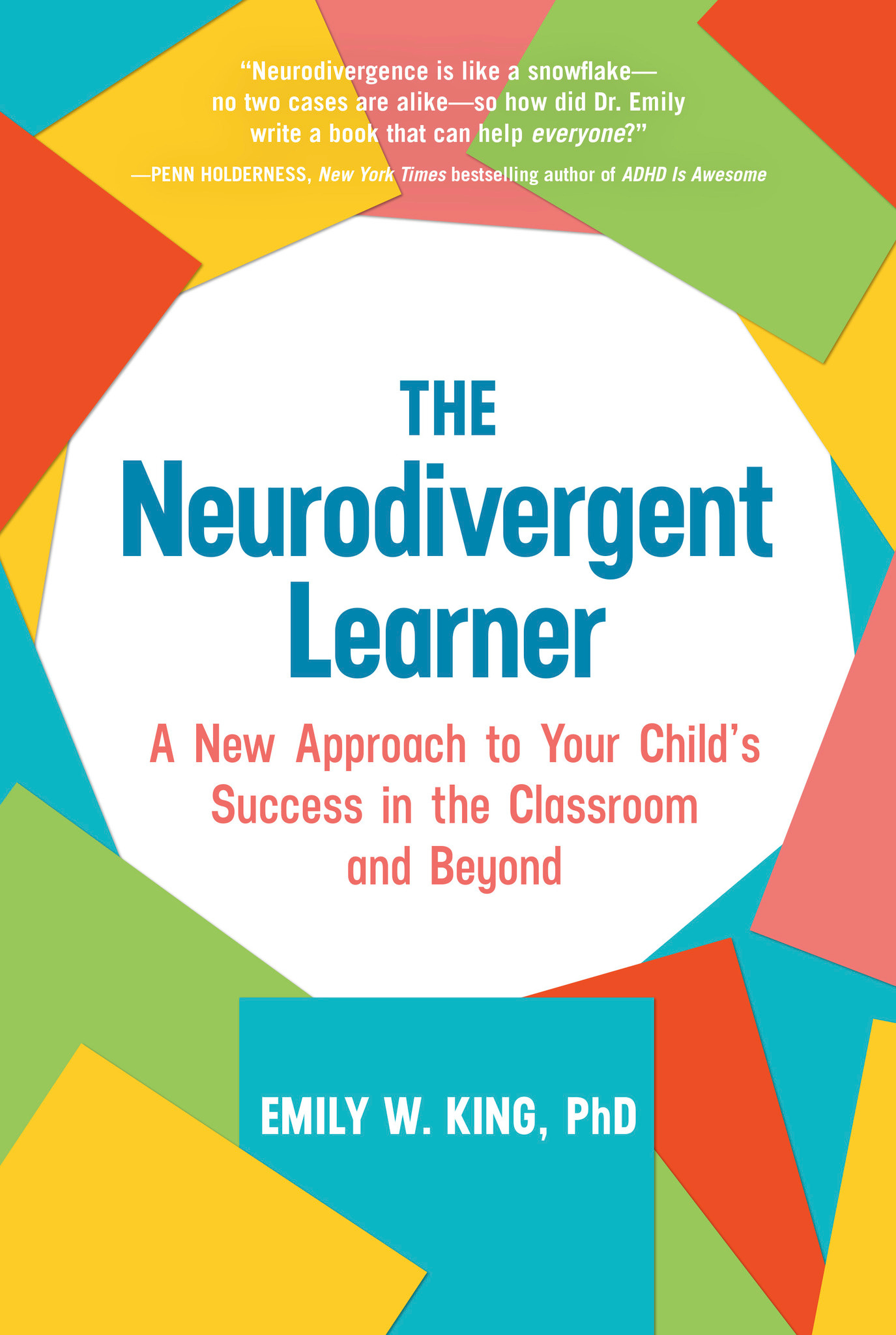
The book has extremely pragmatic advice for parents of children with autism and ADHD who are navigating the school system and figuring out how to support and advocate for their child. So now, I can refer people to Emily’s book when they start asking about these things. If you have a neurodivergent child, get this now!
Connect first, then teach
Emily was kind enough to do an email interview with me about her book. I did ask her advice for parents who have a diagnosed child and are wondering about themselves. Here’s our conversation:
Holden: Your book opens with the idea, “Connect first, then teach.” Why do you believe connection is the foundation for helping children learn and thrive?
Emily: We know from scientific research on the nervous system that humans cannot focus on taking in new information when in a threatened state of hyperarousal. When our nervous systems are in that heightened state, we spend all of our energy on protection through fight or flight responses. We also know through research that we can soothe a young child’s nervous system with co-regulation, using movement, touch, and the safety of connection to help their nervous system return to homeostasis. While our nervous systems have evolved to avoid danger in order to keep us alive, many neurodivergent learners, especially autistic learners, experience a heightened sense of stress from someone’s tone of voice, an abrupt noise, or a change in routine. To help neurodivergent learners return to a state of felt safety, we must first connect with them and then teach. Learning is a vulnerable experience for all of us. We must feel safe and connected to those teaching us in order to take in and trust new information.
Holden: Many autistic behaviors are mistaken for defiance or laziness when they are signs that the child is overwhelmed. How can parents tell the difference?
Emily: One of the first things kids do when they are overwhelmed is avoid. Avoidance might look like arguing or refusing, which usually translates to what many parents and educators see as “defiance.” Avoidance can also look like not getting started in the first place, which we sometimes label “lazy.” The first thing I always ask parents and educators is to look for patterns of resistance. Let’s say a child is avoiding math homework. Do they avoid math work at school? Do they understand the math concepts? Or, do they only avoid it in the afternoon when they would rather be relaxing or playing with friends? Sometimes avoiding work isn’t a skill weakness, but a motivation challenge. It’s important to observe your child’s mood during these times, too. Are they only irritated when pushing back on a demand you have set or are they irritable most of the time? Do they only lack motivation when it comes to cleaning their room or is their energy low all the time? When a child’s mood is negative or energy is low most days, it’s time to reach out to a mental health professional for support. If you can align irritability or lack of motivation to a certain skill, it’s likely that your child needs help either learning that skill or developing a strategy to remember to do it.
We can only do tasks quickly once we have mastered them. If your child is not doing a morning task independently yet, they will not do it better in a rush.
Holden: One of your central messages is that neurodivergent children need to be understood rather than changed. How does that look on a day-to-day basis?
Emily: Start by thinking about the systems around your child. Let’s use the morning routine as an example. Imagine a child who is not yet independent in remembering everything that goes into their backpack and cannot yet predict how much time it takes to get dressed. If we then ask them to rush because we’re running late and they also can’t find their shoes, they will, of course, get in the car having forgotten to brush their teeth. We can only do tasks quickly once we have mastered them. If your child is not doing a morning task independently yet, they will not do it better in a rush. Many neurodivergent learners, especially ADHD learners, don’t need to try harder--they are already trying as hard as they can. What they need are expectations that match their skills and visual strategies to help them remember what, when, and how to do things. Slowing the pace, only requiring mastered tasks to be done quickly, and using visual schedules and lists are changes we can make to the environment to help our kids find more success.
Holden: The book encourages parents to focus on children’s interests instead of only their challenges. Why are a child’s passions such a powerful tool for learning, confidence, and emotional regulation?
Emily: Neurotypical individuals are able to push through boring tasks to get to delayed outcomes because they have the attention span to plan for the future. Neurodivergent learners often struggle to sustain engagement with tasks they find boring or irrelevant. Therefore, if we want to increase motivation and sustain engagement, including interests in learning for neurodivergent students isn’t just a helpful strategy, it’s imperative. Further, feeling passionate about what we are working on helps buffer the frustration that can happen with new learning, increasing exposure to frustration tolerance.
Holden: Do you have any advice or guidance for parents who after observing their child begin to question whether they personally may be neurodivergent?
Emily: Because many types of neurodivergence are hereditary, some parents I work with begin to realize they have lived their whole life with untreated ADHD, for instance. Seeing their child’s struggles unfold all of a sudden explains the many struggles they had in school or relationships. Seeking an evaluation and accepting a new diagnosis is helpful for two reasons: 1) gaining access to treatments or strategies that can improve your life, and 2) incorporating neurodivergence into your identity and finding your people. Becoming self-aware of your own neurodivergence also helps many parents shed unhelpful, learned patterns of parenting and lean into an authoritative style (supportive with boundaries) where parents have more compassion and understanding about their child’s struggles and needs for support.