


Last week, the Office of Science and Technology policy put out a report called “Science: A New Golden Age.” In it, author Michael Kratsios, the Director of the Office of Science and Technology Policy, explains why the old model of doing science in the US, despite enabling most of the good things we enjoy, needs to change. The report does not try to hide that it is a follow-up for “Science: The Endless Frontier,” written in 1945 by Vannevar Bush, who held a similar position to Kratsios for FDR and Truman. (I’ll refer to these two documents as Golden Age and Endless Frontier from here out.)
Golden Age starts off with a letter from Kratsios followed by a letter from President Trump. Endless Frontier starts the same way with letters from Bush and FDR. Kratsios then goes on to talk about all the wondrous things that Endless Frontier has enabled and then explains why the current scientific enterprise in American universities has rendered its principles obsolete through ideology and incompetence. The thrust is to turn the reader against the current American academic scientific establishment, which, in Kratsios’ telling, has taken away all the beautiful things that Bush gave us.
In the Shakespeare tragedy, Julius Caesar, similar events ensue. When Julius Caesar is murdered by Brutus and a group of co-conspirators (on a certain March 15 in Ancient Rome), Marc Antony, who is loyal to Caesar, asks to speak at Caesar’s funeral. Brutus agrees to it provided Antony does not, among other things, blame the conspirators. Antony then gives the most famous funeral oration in the English language where he cleverly turns the crowd against Brutus and the conspirators, leading eventually to a messy battle over who will control Rome. Importantly, Brutus and the rest of the conspirators have different motives. The other conspirators, led by Cassius, are simply out for power; Brutus, in contrast, simply feels that Caesar’s anti-democratic tendencies will be bad for Rome.
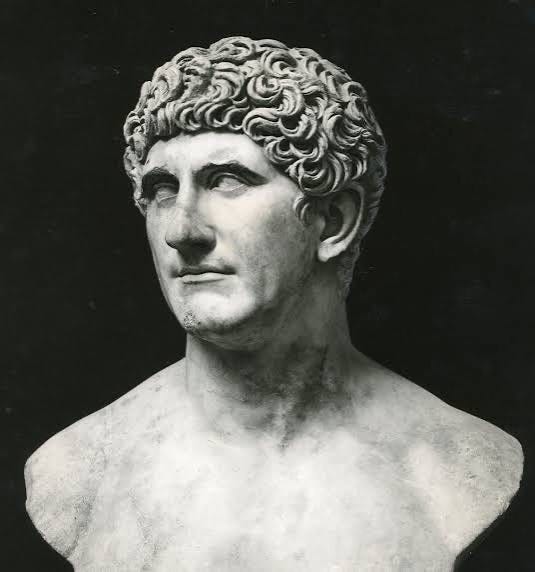
Burying Bush rather than praising him - NOT!
The funeral begins with Brutus explaining that Caesar needed to be killed because he was abusing his power — and that would be bad for Rome in the long run. Because Antony has deceived Brutus into thinking that he will not lionize Caesar in the speech, he famously begins by saying, “I come to bury Caesar, not to praise him,” initially making Brutus think he’s keeping his word.
Similarly, by framing Golden Age precisely the same way as Endless Frontier, Kratsios creates the impression that he is here to recast Endless Frontier with a new document. Such reframing, we must think at the beginning, is not going to go well for Vannevar. Surely, there is a flaw in his logic somewhere if we need to replace his Magna Carta of American science with something new.
But in fact, Antony and Kratsios are both actually here to praise Caesar and Bush, respectively.
Antony:
I speak not to disprove what Brutus spoke,
But here I am to speak what I do know.
You all did love him once, not without cause:
What cause withholds you then, to mourn for him?
O judgment! thou art fled to brutish beasts,
And men have lost their reason. Bear with me;
My heart is in the coffin there with Caesar,
And I must pause till it come back to me.
(It’s more fun to watch Damian Lewis read this here.)
Caesar, we are also told by Antony, was not ambitious to a fault, as Brutus says in justifying his murder, but rather a man of the people who declined a royal crown three times. (And then when the will is read, we find out he left his fortune to the citizens of Rome.)
Similarly, Kratsios:
The foundation of these profound advancements was laid in the years following World War II, thanks largely to the vision set out by Vannevar Bush, the chief science advisor to Presidents Roosevelt and Truman. In his canonical 1945 report, Science: The Endless Frontier, Bush made the prescient case for federal support of basic research, laying the groundwork for the modern scientific enterprise.
Bush, we are told, is “prescient” and gets credit for our “profound advancements.”
And the crowd turns
Antony turns the crowd against the men who killed Caesar. After seeing how generous and approachable he is, surely, anyone who conspired to kill him should be scorned. Similarly, Kratsios is now going to tell us who killed Bush’s glorious vision. It is a combination of ideology infecting research, faculty sloppily creating an irreproducibility crisis, and incompetent universities failing to administer taxpayer funds efficiently.
Ideology (from the point of view of a scientist seeking to get a grant):
Our up-and-coming scientist is further discouraged by the corrosion of the merit principle that once made American research the envy of the world. What began with the NSF’s “broader impacts” criterion, which was a reasonable effort to ensure taxpayer funds benefit society, has evolved into a sweeping distortion of the selection process that reduces mobility for the best researchers. Between 2021 and 2024, the share of new NSF grants focusing on diversity, equity, and inclusion initiatives surged from fractions of a percent to more than a quarter. Our scientist has learned the new rules from principal investigators she has worked for, and is tempted to dress up her otherwise excellent technical proposals with ideological language to survive review.
Reproducibility:
The reproducibility crisis, particularly acute in the social sciences, has undermined future research and public confidence. In one study that attempted to reproduce 100 psychology studies, fewer than 40 succeeded. The challenge extends across other fields as well. In Alzheimer’s research, a celebrated 2009 paper in a top journal presented a promising path to treating the disease. By 2012, other researchers had demonstrated its irreproducibility, and internal reviews at the sponsoring pharmaceutical company terminated drug development based on its findings. Yet the paper accumulated more than 800 citations, misdirecting research priorities and federal funding for another decade. Its lead author became a university president, and the paper was only finally retracted 15 years after publication, shortly after the lead author resigned amid a broader investigation into data manipulation in his laboratories. The scientific review process worked, eventually, but far too late.
And for the laurel wreath on top, the incompetent, bloated universities:
Within academia itself, well-documented inefficiencies compound these structural problems. Administrative burdens on researchers have grown over time; one study found that investigators spend nearly half of their federally funded research time on paperwork rather than on research or teaching. Universities also extract significant overhead from researchers, which funds a mix of legitimate shared infrastructure and growing administrative bloat. Effective indirect cost rates at NIH-funded institutions average more than 40%, even though those same institutions frequently accept 10 to 15% overhead from private funders.
Which further harms our enterprising young scientist:
Senior investigators can delegate paperwork to postdoctoral researchers, but our scientist runs a small lab and has no one to delegate to. She writes grant applications using hours that should have gone to experiments or mentoring students. This is a tax on innovation that does not appear in the federal budget but costs the nation dearly in foregone breakthroughs. These burdens also create a perverse incentive structure, in which scientists who excel at research administration leapfrog those who excel at research performance. The weight falls heaviest on the scientists America needs most.
So, Kratsios has made his case that it is not he who is killing Vannevar Bush - quite the contrary, he is seeking to preserve Bush’s legacy. Rather it is the scientific ideologues, ambitious corner cutters, and lumbering bureaucracy. Assuming the crowd he is trying to turn are people generally disposed to agree with him in the first place, he likely achieves his goal.
We don’t know what Kratsios is thinking to himself as the report comes out. But we do know what Antony said as he walked off the stage:
"Now let it work. Mischief, thou art afoot,
Take thou what course thou wilt!"
So here we go. We’ll see what mischief comes from “Science: A New Golden Age.” We know what followed Antony’s speech was mostly unhappy (it is, after all, a tragedy).
And now, the battle for Ancient Rome
After Antony’s speech, the crowd turns against the conspirators and what follows is a battle for who will lead Rome. Similarly, Golden Age sets up a battle. In the 80 years since Endless Frontier was written, scholars and those shaping science policy have evolved Bush’s vision to one that seeks to include more participants in the scientific process and to center science in democracy, striving for greater benefit to society beyond Bush’s goals in human health and technology. They did good and sensible things like add “broader impacts” to the criteria for NSF grants and start fellowships to increase participation in science by groups that had been underrepresented. Will Kratsios cause America to revert to Bush’s instrumental vision?
The historian Audra Wolfe documented the political and nationalistic goals of Bush’s vision in her excellent book, Freedom’s Laboratory. Wolfe frames the birth of the American scientific enterprise as part of America’s effort in the Cold War, not solely as a quest for scientific knowledge and enlightenment. Endless Frontier is often remembered in policy circles solely as a charter for science as a public good. Wolfe reminds us it is more complex than that. She has said more recently about Bush:
The thing that too few people appreciate about Vannevar Bush is that he wasn’t just a scientific administrator par excellence; he was a consummate Cold Warrior who saw Communism, or even scientific planning, as an existential threat to the American way of life. In 1949, he published a bestselling book, Modern Arms and Free Men: A Discussion of the Role of Science in Preserving Democracy, a fever dream of freedom in the atomic age. You can get a flavor of this text from an excerpt published in the December 5, 1949, issue of Life magazine that ran under the title, “Science, Our Moral Armor.”
The uncomfortable fact for the DC policy crowd is that if Bush were here, he very likely would be persuaded by Kratsios’ argument for change. Bush saw science as a means to an end. He saw it that way because it was a stronger political argument. But he also almost certainly believed it in his bones. He was ardently anti-communist and pro-capitalism. There is a brief bit in Endless Frontier about the humanities and social sciences, but we know that wasn’t something he personally promoted. It’s arguable that he launched the neoliberal era for universities 35 years before “neoliberal” was a word. His idea was that scientists could do good and rely on the market to make it useful. Universities — and to a large extent the scientific enterprise itself — have been adhering to this idea ever since.
Whither Pax Romana
At the end of Julius Caesar, Antony has — at least temporarily — another change of heart. As he surveys the tragedy wrought by all of the parties trying to grab power — Caesar, the conspirators, and himself — he stands above Brutus’ dead body and proclaims him to be the most noble, because he truly wanted what was best for Ancient Rome:
This was the noblest Roman of them all.
All the conspirators save only he
Did that they did in envy of great Caesar.
He only in a general honest thought
And common good to all made one of them.
His life was gentle and the elements
So mixed in him that nature might stand up
And say to all the world “This was a man.”
Antony acknowledges that Brutus acted from true conviction and not a quest for power. So it is for those who have fought to make science better for, as Antony says, the “common good.” Unfortunately, it seems unlikely that Kratsios or anyone else in the administration will come to the same realization as Brutus in the next two years.
Universities remain the right places to center this effort because they are still, for all their flaws, clumsily aspirational.
In the end, Vannevar Bush should be neither buried nor praised. Rather, like the American experiment itself, his vision should be continually improved. “Science: A New Golden Age” argues that the evolution towards a more inclusive and democratically engaged scientific enterprise should be reversed. Universities remain the right places to center this effort because they are still, for all their flaws, clumsily aspirational in a way that private entities cannot be. It will be a loss for science and the country if the center moves as Kratsios has framed.
To paraphrase another Shakespeare character, "the Devil can quote Bush for his purposes." I highly recommend the biography of Vannevar Bush by G. Pascal Zachary to get a sense of the man and his own connections to various industries and institutions (academic or otherwise).
Plenty has been written about that. The point of this piece is that center-left DC policy wonks have been repurposing Bush for decades and it’s come back to bite them.